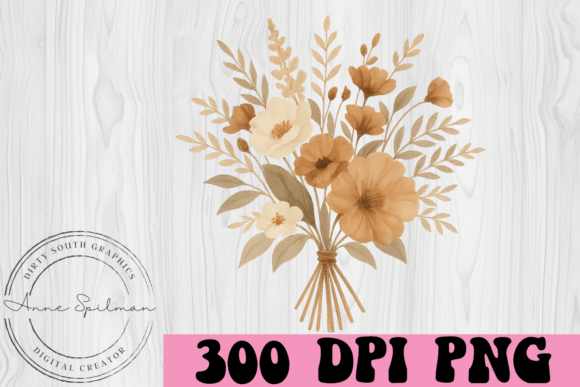
Floral Autumn Bouquet Review for Real Embroidery
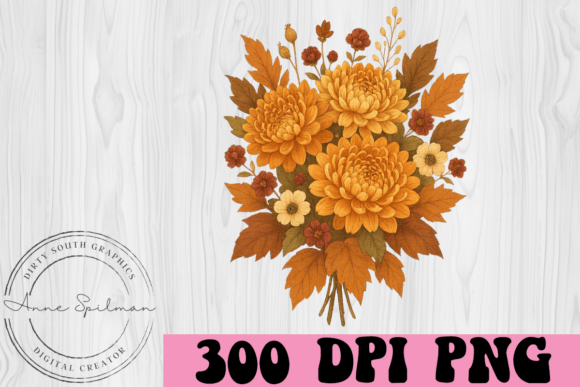
When I first opened the preview of Floral Autumn Bouquet, I didn't just see a pretty picture; I saw a potential bestseller for my upcoming holiday collection. As someone who has stitched thousands of designs on everything from stiff denim to delicate silk, my first instinct is always to look past the digital rendering and imagine the texture of the thread against the fabric. This Graphics asset presents itself as a high-resolution image, specifically noted as a 300 dpi file with a transparent background. It is a substantial piece, measuring at least 2500 pixels on its longest side, which immediately signals that it has enough resolution to be scaled down without losing its soul.
The mood this design creates is undeniably cozy and inviting. The autumnal theme suggests warmth, harvest, and the crisp air of late September or October. Visually, the layout feels balanced, avoiding the cluttered look that often plagues seasonal designs. For a designer looking to create a handmade product that resonates emotionally with customers, this is exactly the kind of visual personality that turns a simple tote bag into a cherished keepsake. It feels like something you would find in a boutique window display, promising quality before the customer even touches the item.
From Digital File to Finished Product: A Real-World Test
Let's talk about how this actually translates when we move from screen to hoop. Imagine I am preparing a custom embroidered sweatshirt for a local craft fair. My goal is to create a unique piece that stands out among the sea of generic merchandise. I pull up the Floral Autumn Bouquet file to use as a reference for digitizing or as a guide for an applique setup. Because this is provided as a PNG and explicitly stated as NOT an SVG, I cannot simply import it directly into my embroidery machine software as a stitch pattern. Instead, I must treat it as a high-quality visual guide or a base for tracing.
In this scenario, the 2500-pixel dimension is a massive advantage. It allows me to zoom in and examine every curve of the petals and the subtle variations in leaf shapes without seeing jagged edges. When I trace this onto my digitizing software to create a true machine embroidery design, I can ensure that the satin stitch paths follow the natural flow of the flowers rather than looking blocky. If I were to use this on a baby onesie, the clarity of the original image ensures that the final embroidered patch or direct-to-garment print will look crisp and professional, building trust with parents who are sensitive to quality.
I also considered using this for a kitchen towel project. The transparency of the background is crucial here. It means I can easily overlay the floral arrangement onto a mockup of a linen towel to see how the colors interact with the weave. The design fits perfectly in the center of a standard towel, offering a focal point that doesn't overwhelm the space. For an Etsy seller creating listings, having such a clean, high-res source file means I can generate stunning printable mockups that accurately represent the final product, reducing returns due to mismatched expectations.
Where Caution Is Required: Fabric and Placement Matters
While Floral Autumn Bouquet is a versatile asset, no single design works perfectly on every surface. I have learned through years of experience that context is king. If I were to attempt to stitch this on a stretchy jersey t-shirt without proper stabilization, the stitch density might cause the fabric to pucker, ruining the delicate details of the bouquet. Similarly, trying to fit this design into a very small hoop size on a cap brim could result in lost detail. The curves of the flowers need room to breathe, especially if I am using a mix of fill stitch and running stitch to add texture.
Dark fabrics present another challenge. Since the source file is a color image, I need to be careful about thread selection. On a black sweatshirt, light-colored threads might not pop unless I use a high-density underlay or specific bright variegated threads. I would advise testing the contrast by converting the image to grayscale in my editing software to visualize how the value distribution will hold up once stitched. Furthermore, textured fabrics like chunky knits or boucle wool can hide fine details. In those cases, I might simplify the design slightly or choose a flatter area of the garment to ensure the embroidery project remains legible.
Another critical consideration is the intended use of the finished item. If this design is going on a commercial product that requires frequent washing, such as a work apron or a children's outfit, the durability of the stitches becomes paramount. Dense areas in the bouquet need to be anchored well to prevent thread breakage. I would recommend checking the hoop size compatibility carefully; if the design is too large for the machine's maximum hoop, I would need to split the stitching or reduce the scale, which could impact the overall aesthetic.
Practical Notes for the Professional Designer
Before committing this design to a client order or a mass-produced line, there are several technical steps that separate a hobbyist from a pro. First, always test the design on scrap fabric. This is non-negotiable. You need to verify how the thread colors appear under your specific lighting conditions and how the fabric reacts to the needle penetration. Even though the file is 300 dpi, remember that this is a raster image used for visualization, not a native vector path. If you are planning to sell this as part of a digital bundle, you must confirm the licensing terms explicitly. Does the purchase allow for commercial use of the finished physical items? Are there restrictions on reselling the digital file itself?
I also suggest comparing the design in both light and dark backgrounds during the planning phase. Sometimes a beautiful autumn palette looks muddy on a dark background but vibrant on cream. Adjusting the stabilizer type based on the fabric weight is equally important; a tear-away stabilizer might be perfect for a stable cotton tote bag, while a cut-away is better for a stretchy hoodie to prevent distortion over time. For those creating custom apparel, ensure the design aligns correctly with seams and pockets. A misaligned tote bag design can make a brand look unprofessional, regardless of how good the flower arrangement is.
Ultimately, Floral Autumn Bouquet offers a strong foundation for creative entrepreneurs. Its high resolution and clear composition make it an excellent starting point for embroidery projects ranging from personalized gifts to boutique branding. However, success lies in the execution. By paying attention to fabric choice, stitch density, and proper preparation, you can transform this digital graphic into a tangible piece of art that customers will love. Whether you are a seasoned craft business owner or a maker selling your first small shop product, this design provides the visual appeal needed to elevate your offerings. Just remember to respect the limitations of the medium and prioritize quality control to ensure your finished product reflects the care you put into the process.